This is one of the most common planning questions we field once a Murchison Falls trip starts extending south into the rest of Uganda’s primate territory. Choosing between Kibale’s chimpanzee trekking and Bwindi’s gorilla trekking, when time or budget don’t allow both, is a genuinely common decision point for travellers extending a Murchison Falls trip south. Both deliver exceptional primate encounters, but they differ enough in cost, physical demand and the actual experience itself that the choice deserves a proper, honest comparison.
The fundamental difference in what you’re seeing
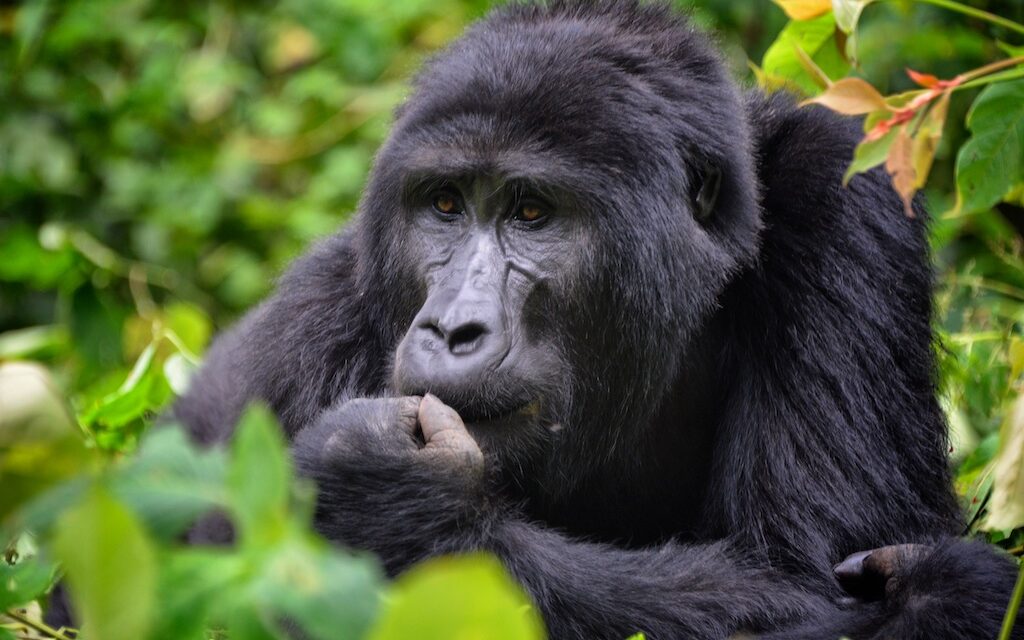
Gorillas and chimpanzees are genuinely different animals with different social structures and behaviour – gorillas, generally calmer and more deliberate, offer a contemplative, often profound encounter with a family group centred around a dominant silverback. Chimpanzees are faster-moving, more vocal and visibly more socially complex in the moment, with a wider range of active behaviour – tool use, territorial calling, play – on display within a typical encounter.
Cost differences
This is often the deciding factor for budget-conscious travellers: a Uganda gorilla permit runs around 800 US dollars, while a Kibale chimpanzee permit costs around 250 dollars, a considerable gap that makes chimp trekking meaningfully more accessible for travellers who want a genuine primate encounter without the full gorilla trekking spend.
Physical demand compared
Gorilla trekking in Bwindi is generally the more physically demanding of the two, given the forest’s steep, often muddy terrain across sectors ranging from 1,400 to 2,600 metres in altitude. Kibale’s chimp trekking, through gentler mid-altitude rainforest with better-maintained trails, is typically less strenuous, making it the more accessible option for travellers with moderate rather than strong fitness.
Time and duration
Both treks vary genuinely in length depending on where the animals have moved overnight, running anywhere from under an hour to several hours each way. Neither activity is reliably shorter than the other in practice, though chimps’ wider daily range can occasionally mean a longer search, while gorilla families tend to stay somewhat more localised within their territory.
The permit booking rules differ too
Gorilla permits, under Uganda’s current rules, must be booked and paid in full through a licensed tour operator rather than purchased directly, with no reserved-hold option once payment is required upfront. Chimp permits follow a broadly similar structure but with less acute scarcity pressure, generally making the whole booking process feel less high-stakes even though the underlying mechanics are comparable.
Rarity and conservation weight
Mountain gorillas are considerably rarer than chimpanzees globally, with a total wild population in the low thousands compared to chimpanzees’ broader, though still endangered, population across a wider range of African countries. Some travellers specifically weigh this rarity factor heavily, feeling that a gorilla encounter carries greater weight given how close the species has come to extinction, though this shouldn’t diminish how genuinely worthwhile a chimp encounter is on its own terms.
What happens if you’re on the fence
When guests genuinely can’t decide between the two, we generally ask what’s actually driving the interest in primate trekking in the first place – a long-held specific dream of seeing gorillas points clearly toward Bwindi regardless of cost, while a more general interest in a strong wildlife encounter without a fixed preference often points toward Kibale’s better value and easier logistics. There’s rarely a wrong answer here, just a better fit for your specific motivation.
Logistics from a Murchison Falls base
Kibale sits closer to Murchison Falls than Bwindi does, with a more straightforward road connection, while Bwindi requires either a longer road day or a domestic flight given its position in Uganda’s far southwest. This logistics difference matters more for travellers with tighter schedules, where Kibale’s relative proximity can make it the more time-efficient addition to an existing Murchison-based itinerary.
Can you genuinely do both
Yes, and many travellers with two weeks or more do exactly this, often via a route that takes in Kibale, then Queen Elizabeth, then continues to Bwindi as one connected southbound circuit. If your time and budget allow it, doing both rather than choosing between them delivers the fullest primate experience Uganda offers, since the two encounters are different enough not to feel repetitive.
Group size and encounter atmosphere
Standard gorilla trekking groups are capped at eight visitors per family, and chimp trekking groups in Kibale are capped slightly smaller, at six per community – a modest difference, but one that gives chimp trekking a marginally more intimate feel in practice. Both remain small, carefully managed group sizes compared to many other wildlife tourism experiences, ensuring neither encounter feels crowded or rushed regardless of which you choose.
Booking timelines for each
Gorilla permits, given their scarcity and popularity, typically need booking three to six months ahead for peak season dates, while Kibale’s larger daily chimp permit allocation across several habituated communities generally offers more flexibility on shorter notice. If your travel dates are close and flexible planning time is limited, this practical difference can itself become a deciding factor between the two.
Guide expertise and commentary depth
Both Bwindi and Kibale draw on guides and trackers with genuine, often years-long familiarity with their respective habituated groups, but the flavour of commentary differs – Bwindi guides often speak to gorilla family dynamics and individual silverback histories, while Kibale guides, drawing on the area’s long-running chimpanzee research tradition, often provide detailed behavioural and social-hierarchy context shaped by decades of ongoing scientific study.
Our honest recommendation
If budget is the primary constraint, Kibale’s chimp trekking delivers a genuinely rich primate encounter at a fraction of gorilla trekking’s cost. If gorilla trekking has been a long-held, specific goal – and for many travellers building a Uganda trip, it genuinely has – we wouldn’t talk you out of prioritising Bwindi even at the higher cost, since it’s frequently described as one of the most profound wildlife encounters available anywhere. Neither choice is wrong; it’s a genuine trade-off between cost, physical demand and which specific animal draws you most.
Recommended safaris for either encounter

Chimp Trekking
4 Days Murchison Falls & Kibale Forest Safari
A more accessible primate encounter at a fraction of gorilla trekking’s cost.
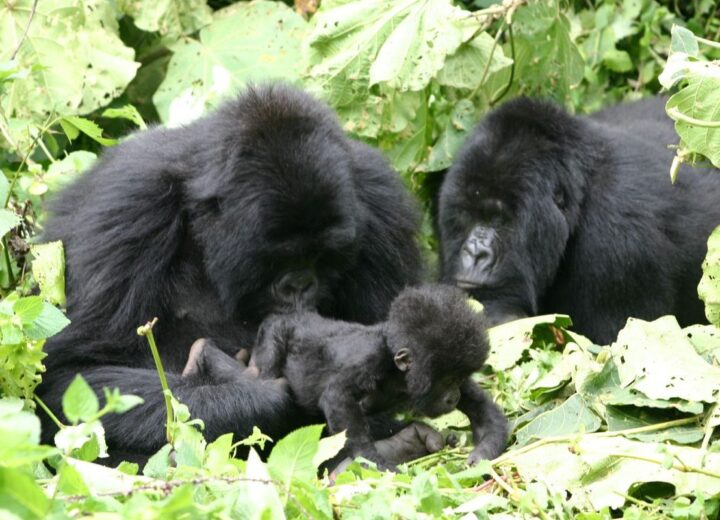
Gorilla Trekking
7 Days Murchison Falls & Bwindi Gorilla Safari
One of the most profound wildlife encounters available anywhere.
Both Encounters
8 Days Murchison Falls, Budongo & Bwindi Gorilla Trek
Chimps and gorillas both, for travellers who don’t want to choose.