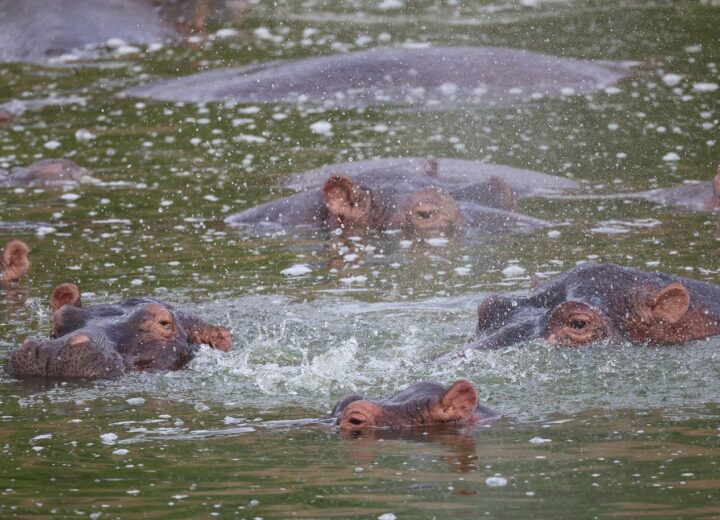

Beyond the crocodiles and hippos that dominate most visitors’ mental image of the Victoria Nile, the riverbanks host genuinely fascinating reptile life – pythons and monitor lizards – that reward guests willing to look beyond the more obvious wildlife stars.
How the Victoria Nile’s reptile diversity extends beyond these two species
Beyond pythons and monitor lizards, the Victoria Nile’s banks and shallows support a genuinely wider range of reptile life, including various smaller lizard species and, of course, the Nile crocodile itself as the river’s apex reptile predator. This broader diversity reflects the genuinely rich ecological complexity supported along one of Africa’s most storied waterways.
African rock pythons: genuinely impressive but rarely seen
African rock pythons, Africa’s largest snake species, inhabit the vegetation along the Victoria Nile’s banks, though their genuinely excellent camouflage and largely sedentary ambush hunting style makes them considerably harder to spot than more active wildlife. A confirmed python sighting represents a genuinely special encounter rather than a routine part of most game drives or boat cruises.
What a python’s constricting hunt genuinely involves
Once a python strikes, it uses genuinely powerful muscular coils to subdue prey through constriction, a method that works by restricting blood flow and breathing rather than crushing bones outright as sometimes popularly depicted. This hunting method, while genuinely dramatic when witnessed, plays out with a kind of controlled, methodical efficiency rather than chaotic violence.
How pythons actually hunt along the riverbank
Rock pythons rely on genuinely patient ambush hunting, remaining motionless within dense riverside vegetation before striking at passing prey with remarkable speed and constricting power. This sedentary hunting style, combined with excellent camouflage, means pythons often remain undetected even when relatively close to boat cruise routes or walking trails.
What a genuinely rewarding python encounter actually feels like
Guests fortunate enough to spot a rock python, typically coiled motionless within riverside vegetation, consistently describe the moment as genuinely thrilling despite the animal’s stillness, precisely because of how rare and unexpected the sighting proves to be against the far more commonly encountered crocodiles and hippos sharing the same riverbank. This rarity gives a python sighting a genuinely different emotional weight than most other wildlife encounters on a standard cruise.
Genuine python size and what makes them so impressive
African rock pythons can reach genuinely substantial length, among the longest snake species found anywhere in Africa, capable of taking prey considerably larger than what smaller snake species could manage. This impressive size is part of what makes any confirmed sighting such a genuinely memorable encounter for guests fortunate enough to witness one.
Nile monitor lizards: considerably more commonly encountered
Nile monitor lizards offer a genuinely more accessible reptile encounter than pythons, frequently seen basking on riverbanks or swimming through the Victoria Nile during boat cruise activities. Their considerably more visible, active daytime behaviour makes them one of the more reliable reptile sightings across a standard Murchison Falls itinerary.
Monitor lizard size and genuine physical characteristics
Nile monitors rank among Africa’s largest lizard species, with a genuinely powerful build, sharp claws and a distinctive forked tongue used for scent detection much like a snake’s. Their considerable size and confident, unhurried movement along riverbanks makes them genuinely easy to identify once spotted.
What monitor lizards actually eat
Nile monitors are genuinely opportunistic predators and scavengers, consuming eggs, small vertebrates, carrion and even crocodile eggs when the opportunity arises, a dietary flexibility that makes them ecologically significant predators within the riverside food web. This includes a genuinely important role as crocodile egg predators, adding real ecological complexity to their relationship with the Nile’s other reptile residents.
How monitor lizards interact with crocodiles
Despite their genuine size and confidence, Nile monitors maintain real respect for the Victoria Nile’s crocodile population, generally avoiding direct confrontation while still occasionally raiding crocodile nests for eggs when adult crocodiles aren’t present to defend them. This cautious coexistence reflects genuine ecological balance between the river’s various reptile predators.
Why patience during quieter cruise stretches genuinely pays off
The quieter, slower-moving stretches of a boat cruise – often the parts guests are tempted to treat as downtime between hippo and crocodile encounters – are frequently exactly when monitor lizard sightings occur, rewarding guests who stay genuinely engaged and attentive throughout the entire activity rather than only during its most obviously dramatic moments.
Best places and times for monitor lizard sightings
Monitor lizards are most reliably spotted basking on exposed riverbank rocks or logs during warmer daylight hours, making the Victoria Nile boat cruise a genuinely productive activity for consistent sightings. Their preference for sun exposure to regulate body temperature makes mid-morning through early afternoon particularly reliable viewing windows.
Why reptile sightings deserve genuine attention on your cruise
Focusing purely on hippos and crocodiles during a Nile boat cruise means many travellers miss genuinely rewarding monitor lizard and, more rarely, python sightings along the same riverbanks. We’d encourage every guest to keep a genuinely attentive eye on riverside vegetation and exposed rocks throughout the cruise rather than only scanning open water.
How guides help spot these genuinely camouflaged reptiles
Experienced boat cruise guides know genuinely productive basking spots and vegetation edges where monitor lizards and, occasionally, pythons are more likely to be encountered, applying real spotting expertise that considerably improves your odds beyond casual scanning alone. Mentioning your interest in reptiles specifically helps guides prioritise this kind of sighting during your cruise.
Safety considerations around these reptile species
Both pythons and monitor lizards are generally non-aggressive toward humans when given appropriate space, with genuine incidents being rare occurrences rather than a realistic safety concern during a standard, guided boat cruise or game drive. Standard wildlife-viewing etiquette – maintaining respectful distance and following guide instructions – applies here as it does with any wildlife encounter.
Our honest recommendation for reptile-focused travellers
If reptiles genuinely interest you beyond the standard mammal-focused safari checklist, mention this specifically when planning your itinerary, and we’ll factor dedicated attention to riverside vegetation and basking spots into your boat cruise to improve your chances of a genuinely memorable python or monitor lizard encounter.
How python digestion genuinely shapes their behaviour patterns
After a genuinely large meal, pythons can remain largely inactive for extended periods while digesting, meaning a python encountered shortly after feeding may appear strikingly still and unresponsive compared to a more alert individual actively hunting. Understanding this behavioural pattern helps guests interpret what they’re actually observing rather than assuming an inactive python is simply uninterested in its surroundings.
What genuinely distinguishes Nile monitors from other African lizard species
Nile monitors are semi-aquatic, genuinely comfortable both on land and swimming through water in pursuit of prey or simply moving between basking sites, a versatility that distinguishes them from more strictly terrestrial lizard species found elsewhere in the park. This aquatic adaptability is precisely why the Victoria Nile’s edge offers such consistently productive monitor lizard habitat.
How monitor lizards use their forked tongue
Much like snakes, Nile monitors use their genuinely forked tongue to collect airborne scent particles, drawing them across a specialised sensory organ that provides detailed chemical information about their surroundings, including potential prey or threats. Watching a monitor lizard’s tongue flick repeatedly as it investigates its environment offers a genuinely fascinating glimpse into how differently reptiles experience the world compared to mammals.
Why reptile encounters offer a genuinely different kind of wildlife appreciation
Reptile sightings reward a genuinely different observational approach than typical mammal viewing – patience for stillness, appreciation for camouflage and subtle movement, and genuine curiosity about behaviour that unfolds more slowly than a dramatic predator chase. This shift in observational style adds real variety to a broader Murchison Falls wildlife experience.
What juvenile monitor lizards look like compared to adults
Young Nile monitors display genuinely brighter, more vividly patterned skin than the duller, more uniformly coloured adults, a pattern that likely serves camouflage purposes specific to their smaller size and different predator vulnerability during early life stages. Spotting a juvenile alongside a larger adult offers a genuinely interesting size and colour comparison worth pointing out during a cruise.
How local communities have historically regarded these reptiles
Communities living alongside the Victoria Nile have genuine historical familiarity with both pythons and monitor lizards, developing practical knowledge of their behaviour and any real safety considerations through generations of shared riverside life. This local knowledge, when shared by guides with genuine community connections, adds authentic cultural context beyond simply biological facts.
Let us know if reptiles genuinely rank among your wildlife priorities, and we will make sure this preference shapes both your boat cruise routing and your guide’s specific attention throughout the activity, from the moment you first board right through to the final stretch of river.
Recommended safaris

Signature Safari
3 Days Murchison Falls Safari
A Nile boat cruise offering genuine reptile viewing opportunities.

Luxury
3 Days Murchison Falls Luxury Safari
Private guiding well suited to specialist wildlife interests.

Grand Circuit
9 Days Murchison Falls Grand Uganda Wildlife Circuit
Multiple river cruises to maximise your reptile-spotting odds.