Most travellers hear about Ziwa Rhino Sanctuary for the first time when a planner mentions it as a stop on the drive to Murchison Falls, and few arrive expecting it to be anything more than a convenient break in a long journey. Ziwa Rhino Sanctuary sits on the main road route between Kampala and Murchison Falls, and for many travellers it becomes an unplanned highlight rather than a box-ticking stop along the way. It’s Uganda’s only place to track rhinos, home to the country’s entire wild rhino population after decades in which the species was locally extinct, and the experience of tracking them on foot is genuinely different from anything else on a standard Murchison itinerary. This guide covers what Ziwa actually is, how the tracking works, and why it’s worth building into your trip rather than treating it as a convenient rest stop.
Why Uganda has no wild rhinos outside Ziwa
Uganda’s rhino population was wiped out by poaching and the political instability of the 1970s and 1980s, with the last wild rhinos in the country believed gone by the late 1980s. Ziwa Rhino Sanctuary was established in the early 2000s specifically to reintroduce and protect the species, starting with a small founding population brought in from Kenya and Disney’s Animal Kingdom in the United States, and growing steadily since through natural breeding within the sanctuary’s protected, closely monitored grounds. Every rhino at Ziwa today descends from that original founding group, making the sanctuary’s growth a genuinely measurable conservation success story rather than a static tourist attraction.
How many rhinos live at Ziwa today
The sanctuary’s population has grown from its small founding group to several dozen individuals today, with new births announced periodically as the breeding programme continues – a genuinely rare piece of unambiguously good conservation news from a region where most species-recovery stories come with significant caveats. Each birth is individually meaningful given how small the starting population was, and rangers and guides at the sanctuary generally know each rhino individually, often sharing their specific history and family relationships during the tracking walk itself.
What kind of rhinos live there
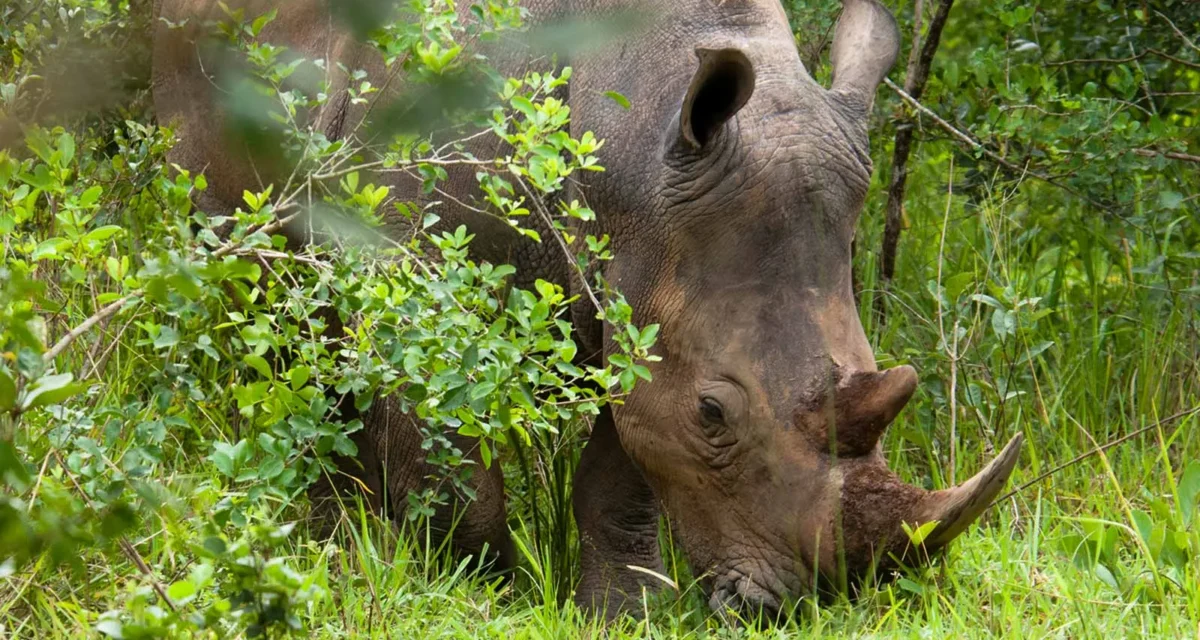
Ziwa is home to southern white rhinos specifically, a species distinct from the black rhino that historically also occurred in parts of Uganda. White rhinos are generally calmer and more grazing-focused than black rhinos, which affects how the tracking experience actually works – they’re typically found grazing in open or lightly wooded areas rather than hidden in dense bush, which makes foot tracking considerably more viable and predictable than it would be with a more elusive, browsing species.
How rhino tracking actually works
Tracking at Ziwa happens entirely on foot, led by an armed ranger and a dedicated tracker who monitors the sanctuary’s rhinos daily and generally knows their approximate location before your walk even begins. The walk itself is usually short and manageable, typically thirty minutes to an hour depending on where the rhinos are grazing that day, crossing open grassland rather than dense forest. Once located, visitors approach to a safe, ranger-managed distance – close enough for a genuinely powerful, unobstructed view and photography, while maintaining a buffer that keeps both visitors and the rhinos calm.
Best times of day to track
Early morning and late afternoon tracking sessions tend to produce the best experience, both because rhinos are more actively grazing during cooler parts of the day and because the light suits photography considerably better than the flat glare of midday. Most itineraries schedule the tracking session either as a stop on the drive in during late afternoon or as a stop on the drive out in early morning, timed to take advantage of this natural activity pattern rather than an arbitrary midday visit.
What else the sanctuary offers
Beyond rhino tracking itself, Ziwa protects a broader area of wetland and grassland habitat supporting a genuinely strong bird list, including sightings of the shoebill stork in the sanctuary’s swampy areas – a second chance at this sought-after species beyond the Murchison Falls delta, useful for birders wanting to maximise their odds across a trip. A boat cruise option on the sanctuary’s wetland system is also available for visitors with extra time, offering a quieter, water-based alternative to the standard walking track.
Comparing Ziwa to rhino experiences elsewhere in East Africa
Unlike southern and eastern African countries where rhino sightings can happen incidentally during a standard game drive in a large national park, Uganda’s rhino population exists only within Ziwa’s dedicated, fenced and closely guarded sanctuary – a direct consequence of how severely poaching devastated the species here. This makes Ziwa less a spontaneous sighting and more a deliberate, guided tracking experience, closer in feel to gorilla or chimp trekking than to a typical Big Five game drive, which is worth knowing so expectations match the reality of how the encounter actually unfolds.
How long to spend at Ziwa
Most visitors treat Ziwa as a half-day stop, combining the rhino tracking walk with a meal at the sanctuary’s restaurant before continuing the journey to or from Murchison Falls – this fits naturally into the existing road transfer without adding a significant extra day to your itinerary. Travellers with a deeper interest in the conservation story, or wanting the boat cruise and birding alongside the tracking, sometimes extend to an overnight stay at the sanctuary’s own accommodation, which adds a second tracking session and considerably more unhurried time with the rhinos.
The conservation story worth understanding
Ziwa’s success is a genuinely instructive case study in species reintroduction done carefully – starting from a tiny founding population, protecting it with serious, well-funded security given how valuable rhino horn remains to poaching networks, and allowing natural breeding to slowly rebuild numbers over two decades. The sanctuary’s longer-term goal is eventually reintroducing rhinos back into larger protected areas like Murchison Falls itself once security and population numbers support it – a goal not yet achieved but actively part of the sanctuary’s stated mission, worth asking your guide about if you’re curious how close that reintroduction actually is.
Photography at Ziwa
The open grassland setting and the rhinos’ relatively calm, grazing-focused behaviour make Ziwa one of the more forgiving wildlife photography opportunities on a Uganda trip – less reliant on fast reflexes or long lenses than a typical game-drive sighting, since the tracking approach itself gets you to a stable, appropriately close position rather than shooting from a moving vehicle at a distance. A mid-range zoom covers most of what you’ll want here, and the early morning or late afternoon timing recommended above also happens to deliver the best light for it.
What it costs and what’s included
Rhino tracking at Ziwa is priced separately from Murchison Falls park fees, generally a modest, flat per-person charge covering the guided walk itself, with the sanctuary’s restaurant and any boat cruise or overnight accommodation billed separately. When booked as part of a package with us, this is folded into your overall itinerary cost along with everything else, so there’s no separate transaction required on the day.
Safety and what to expect from the walk
Despite their size, white rhinos are generally not aggressive toward calm, quiet groups maintaining appropriate distance under ranger guidance, and incidents involving visitors are rare precisely because the sanctuary’s protocols are designed conservatively around this. That said, this is a genuine wild-animal encounter on foot, not a zoo enclosure, and following your ranger’s instructions precisely – moving quietly, not approaching independently, staying together as a group – matters as much here as on any other wildlife walking activity.
Combining Ziwa with your Murchison Falls trip
Given its position directly on the standard road route, adding Ziwa to a Murchison itinerary costs relatively little in extra time or logistics complexity, which is a large part of why we build it into most of our standard packages by default rather than treating it as an optional extra. For travellers specifically drawn to Uganda’s conservation recovery stories, or simply wanting a genuinely different activity from game drives and boat cruises, Ziwa consistently ranks among the most memorable single stops on a Murchison-focused trip, often surprising guests who expected it to be a minor waypoint rather than a real highlight.
Recommended safaris with rhino tracking included
Rhino Trek
3 Days Murchison Falls & Ziwa Rhino Trek
A night at Ziwa so the walking rhino track falls in the soft light of late afternoon or early morning.

Extended
5 Days Murchison Falls & Ziwa Rhino Extended Safari
Rhino tracking, a Budongo forest walk, a dedicated delta boat trip and two full game drives, unhurried.

Signature Safari
3 Days Murchison Falls Safari
Ziwa built in as a default stop on the way to the park, alongside the falls, cruise and game drive.