The Big Five in Murchison Falls National Park: Wildlife Safari Guide
The Big Five are some of the most iconic animals associated with an African safari, and seeing these magnificent creatures in their natural environment is a dream for many travelers visiting Uganda. The African elephant, African buffalo, lion, leopard and rhinoceros have become symbols of the African wilderness, representing strength, beauty, survival and the extraordinary diversity of wildlife found across the continent. For visitors planning a safari in Uganda, the opportunity to encounter some of these legendary animals adds an exciting dimension to the journey.
Murchison Falls National Park is one of Uganda’s most remarkable destinations for wildlife viewing. Located in the northwestern part of the country, the park combines expansive savannah plains, woodland, riverine habitats and the mighty River Nile to create an environment where a wide variety of wildlife can thrive. Game drives through the northern sector of the park provide opportunities to search for elephants, buffaloes, lions and, with patience and luck, leopards.
Although the term “Big Five” is often used when discussing African safaris, it is important to understand that seeing all five animals within one national park is not always possible. Wildlife populations and conservation programs differ from one destination to another. In the case of Murchison Falls National Park, elephants, buffaloes and lions are among the major wildlife attractions, while leopards are more elusive. Rhinoceros are not currently roaming wild within Murchison Falls, but travelers can include a visit to Ziwa Rhino Sanctuary in a northern Uganda itinerary to experience rhino conservation.
The search for the Big Five should therefore be viewed as part of a much larger safari experience. Murchison Falls offers much more than five famous animals. Its giraffes, Uganda kobs, hartebeests, waterbucks, warthogs, hippos, crocodiles and hundreds of bird species all contribute to the extraordinary character of the park.
Understanding the Big Five
The phrase “Big Five” originally developed from the history of big-game hunting in Africa. The animals were considered particularly challenging and dangerous to hunt on foot. Over time, however, the meaning of the term changed dramatically. Modern safari tourism has transformed the Big Five into a symbol of wildlife conservation and responsible tourism.
Today, travelers generally use the term to describe the African elephant, African buffalo, lion, leopard and rhinoceros. These five animals are not necessarily the five largest animals in Africa, nor are they necessarily the rarest. Their importance comes from their historical association with African wildlife and the fascination they continue to generate among safari visitors.
For someone visiting Murchison Falls National Park, encountering one of these animals can be an unforgettable moment. Seeing a massive elephant herd crossing the savannah, watching buffaloes grazing in the morning light or discovering a lion resting beneath a tree can make a game drive extraordinarily rewarding.
African Elephants in Murchison Falls National Park
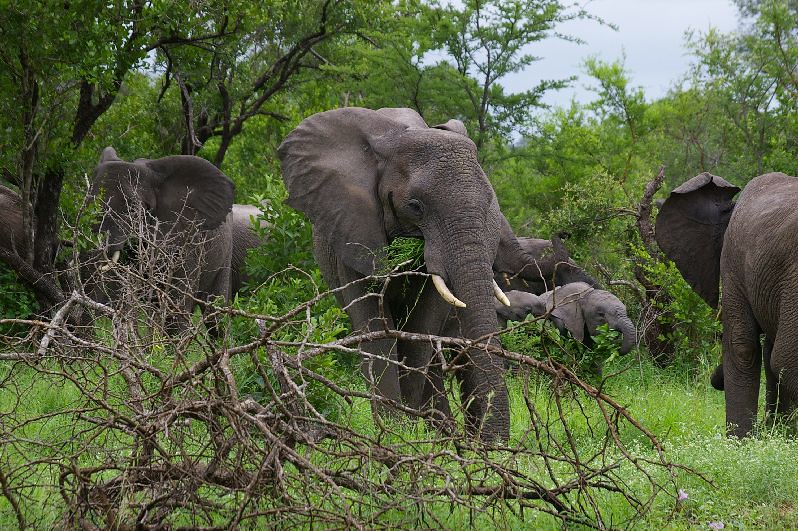
The African elephant is one of the most impressive animals that visitors can encounter during a game drive in Murchison Falls National Park. These enormous mammals are a major part of the park’s wildlife experience and can often be observed moving through the savannah and woodland habitats.
Elephants are highly social animals and usually live in family groups led by experienced females. A herd may include mothers, young elephants and other related individuals. Young calves remain close to adults, particularly when the herd is moving through areas where potential threats may be present.
Watching an elephant herd in the wild provides an opportunity to observe natural behavior that cannot be experienced in a zoo. Elephants may be seen feeding on grass, leaves, branches and other vegetation. They may also use their trunks to explore their surroundings, communicate with other elephants and drink water.
The Nile and other water sources are particularly important to wildlife in Murchison Falls. During warmer periods, elephants may move toward water to drink and cool themselves. Seeing elephants near water can create excellent opportunities for wildlife photography while also allowing visitors to observe their natural behavior.
One of the most fascinating aspects of elephant encounters is their sense of family. Adult elephants often remain attentive to calves, while younger animals can be seen playing, exploring and learning from older members of the herd.
For many travelers, an elephant encounter becomes one of the defining moments of a Murchison Falls safari.
African Buffaloes in Murchison Falls
The African buffalo is another member of the Big Five that visitors can encounter during game drives in Murchison Falls National Park. Buffaloes are powerful, social animals that can often be found grazing in open grasslands.
Large herds moving across the savannah can be particularly impressive. From a safari vehicle, visitors may see dozens of buffaloes spread across the plains, with some animals grazing while others remain alert to their surroundings.
Buffaloes have a reputation for being powerful and unpredictable, which is one reason they are among the animals included in the Big Five. However, responsible safari viewing means maintaining a safe distance and following the instructions of the safari guide.
Buffaloes are herbivores and spend considerable amounts of time feeding. Their grazing activity also plays a role in the wider ecosystem because their movements and feeding habits influence vegetation and provide opportunities for other species.
A buffalo herd may also include younger animals. The presence of calves makes the sighting even more interesting because visitors can observe the protective behavior of adults within the group.
During a Murchison Falls game drive, encountering a large buffalo herd against the backdrop of the open savannah can be one of the most memorable wildlife experiences.
Lions of Murchison Falls National Park
The African lion is perhaps the animal most strongly associated with the idea of an African safari. With its powerful body, distinctive mane and reputation as one of Africa’s top predators, the lion is an animal many visitors hope to see during a game drive.
Murchison Falls National Park provides important habitat for lions. Finding them, however, requires patience because lions can move over considerable distances and may spend long periods resting.
Early morning game drives can be particularly exciting because the cooler temperatures may coincide with periods of increased predator activity. Lions may be seen walking through grassland, resting after a hunt or moving toward areas where prey animals are found.
During the heat of the day, lions often rest. A pride may lie beneath vegetation or in a shaded area, making them more difficult to spot. This is where an experienced safari guide becomes extremely valuable.
Guides understand animal behavior and can sometimes recognize subtle signs indicating that lions may be nearby. They may also communicate with other guides about recent sightings, helping visitors increase their chances of encountering these magnificent predators.
Seeing lions in the wild is completely different from seeing them behind barriers. There is a sense of anticipation when the vehicle approaches an area where lions are believed to be resting. The moment a lion emerges from the grass or appears beneath a tree can become an unforgettable part of the safari.
Leopards in Murchison Falls
The leopard is often considered one of the most elusive members of the Big Five. Unlike elephants and buffaloes, which can sometimes be seen in relatively large groups, leopards are solitary and secretive animals.
Their spotted coats provide excellent camouflage, allowing them to disappear into vegetation and woodland. Leopards may also rest in trees, making them difficult to locate from a moving safari vehicle.
Finding a leopard requires patience, careful observation and knowledge of the environment. Safari guides may search for tracks, movement in vegetation or other signs that indicate a leopard has passed through an area.
The excitement of finding a leopard comes partly from its unpredictability. A game drive may seem quiet for some time before a guide suddenly notices an animal resting beneath a tree or moving through the grass.
Leopards are powerful predators capable of hunting a variety of prey. Their adaptability allows them to survive in different environments, and their secretive nature has helped them maintain their reputation as one of Africa’s most mysterious predators.
For travelers interested in wildlife photography, a leopard sighting can be especially rewarding. Its distinctive coat, powerful build and cautious behavior make it an extraordinary subject.
Rhinoceros and the Murchison Falls Safari Experience
Rhinoceros are the fifth member of the Big Five, but they are not currently part of the wild wildlife population of Murchison Falls National Park. Travelers who want to include rhino tracking in their northern Uganda safari can visit Ziwa Rhino Sanctuary.
The sanctuary plays an important role in rhino conservation in Uganda. Visitors can participate in guided rhino tracking and learn about the conservation efforts aimed at protecting these remarkable animals.
Including rhino tracking before or after a Murchison Falls safari can make a northern Uganda itinerary particularly rewarding. Travelers can combine the experience of seeing rhinos with game drives in Murchison Falls, creating an opportunity to encounter several members of the Big Five during one broader journey.
The conservation story of the rhinoceros is also an important reminder that wildlife tourism is connected to long-term conservation. Protected areas and conservation organizations play a major role in giving threatened species opportunities to recover and ensuring that future generations can experience them.
The Big Five and the Murchison Falls Ecosystem
The Big Five do not exist separately from the rest of the ecosystem. Each species interacts with other animals, vegetation, rivers and landscapes.
Lions depend on prey species such as antelopes and other herbivores. Leopards also depend on a healthy population of prey. Elephants influence vegetation through their feeding and movement, while buffaloes contribute to the grazing dynamics of the savannah.
This interconnectedness is what makes a game drive so fascinating. A safari guide may begin by pointing out a herd of Uganda kobs and then explain that their presence contributes to the food chain that supports predators such as lions.
The presence of large herbivores also demonstrates the importance of water and vegetation. During dry periods, wildlife may concentrate around remaining water sources, making these areas particularly interesting for game viewing.
Murchison Falls is therefore not simply a destination where visitors go to look for individual animals. It is a functioning ecosystem where thousands of organisms interact every day.
Game Drives and the Search for the Big Five
Game drives are the primary way most visitors search for the Big Five in Murchison Falls National Park. Safari vehicles travel along established tracks through the northern sector, allowing visitors to explore different habitats.
A typical game drive can begin early in the morning when the landscape is cool and quiet. The vehicle slowly moves through the savannah while the guide searches the surroundings for signs of wildlife.
Sometimes animals are immediately visible. At other times, visitors may drive for some distance before finding anything significant. This unpredictability is an important part of the safari experience.
The guide may stop the vehicle when an interesting animal is spotted, allowing visitors to observe it without unnecessary disturbance. The vehicle may remain stationary while the animals continue with their natural activities.
Afternoon drives provide another opportunity to search for wildlife. As temperatures begin to decline, some animals become more active again. The changing light also creates beautiful conditions for photography.
Why You Should Not Focus Only on the Big Five
Although seeing the Big Five is exciting, travelers should avoid judging their entire safari by whether they see all five animals.
Murchison Falls National Park is home to an impressive variety of wildlife. Giraffes are among the most recognizable animals in the park, while Uganda kobs can often be seen grazing across the plains.
Warthogs, waterbucks, hartebeests and other antelopes add diversity to the landscape. Hippos and crocodiles provide another dimension along the Nile, while birds fill the park with color and sound.
A safari can be unforgettable even without seeing a leopard or lion. Watching a herd of elephants cross the road, seeing giraffes silhouetted against the morning sky or observing hippos along the river can be just as meaningful.
The real value of a safari is the opportunity to experience nature in its natural environment.
Best Time to Search for the Big Five
Murchison Falls National Park can be visited throughout the year, although wildlife viewing conditions change with the seasons.
During drier periods, vegetation can become less dense, and animals may gather around water sources. These conditions can make wildlife easier to spot in certain areas.
The wet seasons bring fresh vegetation and greener landscapes. The park can become particularly beautiful after rainfall, and the abundance of water and vegetation creates excellent conditions for many species.
Morning and late afternoon are generally popular periods for wildlife viewing because temperatures are more comfortable and many animals can be active during these times.
Ultimately, there is no guarantee of seeing a particular animal. Wildlife moves freely through the park, and every game drive is different.
Combining the Big Five Experience With Other Activities
A Murchison Falls safari becomes even more rewarding when the game drive is combined with other activities.
A boat cruise along the Victoria Nile allows visitors to observe hippos, crocodiles, elephants and numerous water birds from a different perspective.
A visit to the Top of Murchison Falls provides an opportunity to witness the powerful Nile as it passes through a narrow gorge before continuing downstream.
Travelers interested in primates can also explore areas around Budongo Forest, while birdwatchers can spend time searching for the many species found throughout the region.
For those who want to complete a broader Big Five experience, adding rhino tracking at Ziwa Rhino Sanctuary can make the northern Uganda journey even more memorable.
The Role of Conservation in Protecting the Big Five
The survival of Africa’s wildlife depends heavily on conservation. Protected areas such as Murchison Falls National Park provide important habitats where animals can live, reproduce and move naturally.
Tourism contributes to conservation by creating economic value around wildlife and protected landscapes. When travelers visit national parks responsibly, their tourism activities can contribute to the wider conservation economy.
Guided tourism also helps educate visitors about the importance of wildlife protection. A safari guide does more than identify animals; they can explain why habitats matter, how animals interact and why responsible behavior is essential.
Protecting the Big Five therefore requires cooperation between conservation authorities, local communities, tourism operators, guides and visitors.
A Complete Big Five Safari Experience in Uganda
A Big Five-focused journey through northern Uganda can be designed around wildlife, conservation and adventure. Murchison Falls can form the centerpiece of the experience because of its elephants, buffaloes, lions and opportunities to search for leopards.
Adding Ziwa Rhino Sanctuary provides an opportunity to experience rhino conservation, while combining the game drives with a boat cruise introduces visitors to the aquatic wildlife of the Nile.
The result is much more than simply checking animals off a list. It becomes a journey through Uganda’s landscapes and ecosystems.
Travelers get to experience open savannah, forests, rivers, waterfalls and wildlife while learning about the importance of protecting these natural resources.
Conclusion
The Big Five in Murchison Falls National Park represent some of the most exciting wildlife experiences Uganda has to offer. African elephants, buffaloes, lions and elusive leopards can make game drives through the park unforgettable, while rhino tracking at Ziwa Rhino Sanctuary can complement the experience for travelers hoping to encounter all five members of the famous group.
However, the true beauty of a Murchison Falls safari extends far beyond the Big Five. The park is a living ecosystem where giraffes move through the savannah, antelopes graze across the plains, hippos gather in the Nile and crocodiles wait quietly along the riverbanks.
Every game drive brings a sense of anticipation because wildlife is never completely predictable. One moment the savannah may appear quiet, and the next moment an elephant herd may emerge from the woodland or a lion may be spotted resting in the grass.
That unpredictability is what makes an African safari so special.
Murchison Falls National Park offers travelers the opportunity to experience Uganda’s wilderness in a way that combines wildlife, scenery, adventure and conservation. Whether your dream is to see a powerful lion, watch elephants crossing the savannah, observe buffaloes moving in herds or patiently search for a hidden leopard, the park provides an unforgettable setting for the experience.
For anyone planning a Uganda wildlife safari, the Big Five can be an exciting part of the journey, but the greatest reward is experiencing the entire wilderness of Murchison Falls and appreciating the extraordinary relationship between its animals, landscapes and people.